Featured Export-Grade Aluminum Fenestration Products
Engineered in Foshan, China — Custom Configured for Low-Energy Residential & Commercial Projects in South Korea
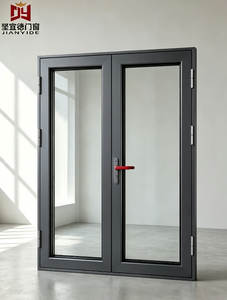
Thermal Break Aluminium Casement Doors Energy Efficient Waterproof Windproof for European Villas Custom OEM and ODM CE Certified
Get Catalog
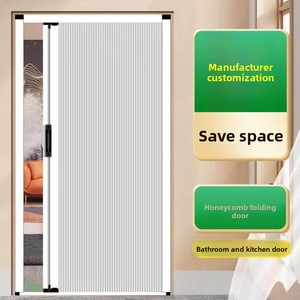
Sliding Folding Aluminum Alloy Curtain Partition Windows Drill-Free Invisible Waterproof Suitable Kitchens Bedrooms Bathrooms
Get Catalog
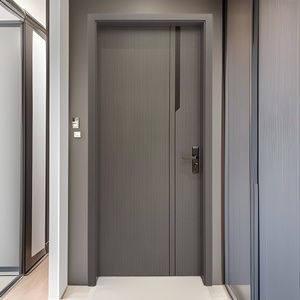
Foshan Aluminum Alloy Anti-Theft Bedroom Door Household Soundproof Environmentally Friendly All-Aluminum Interior Study Door
Get Catalog
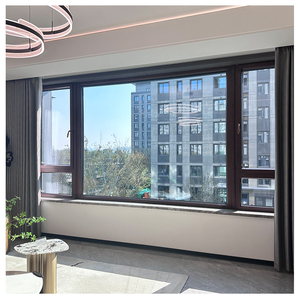
Aluminum-Clad Timber Window PHI EnerPHit Ready Uw≤0.8 W/m²K ROTO Hardware CE EN14351 Heritage Style Available
Get Catalog
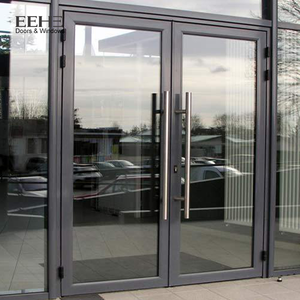
EEHE NFRC Certified Aluminum Double Swing Door Sound Insulation Commercial Patio Entrance Doors
Get Catalog
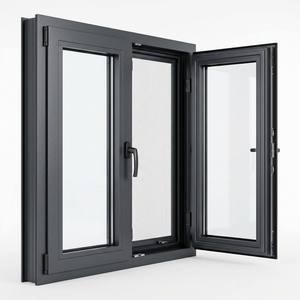
Modern Design Thermal Break Soundproof Double Glass Aluminium Openswing windows For Luxury Residential Villa With Screen Window
Get Catalog
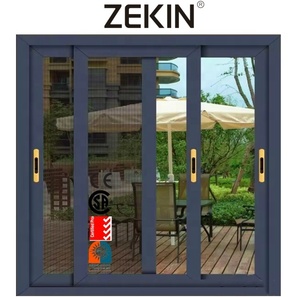
Sliding Window Hurricane Impact Proof Aluminum Energy Efficient NFRC AS2047 Glass Sliding windows Double Glass Aluminum Window
Get Catalog
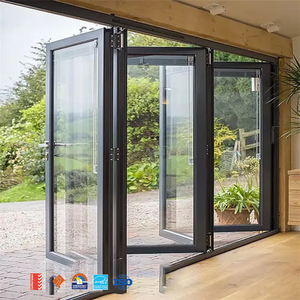
AMJ Heavy Duty Coastal Glass Commercial Aluminum windows and Doors Patio Folding Glass Door Double Glazed Glass Bifold Doors
Get Catalog
20,000 m²
Foshan Production Base
Uw ≤ 1.1
Thermal Performance (W/m²K)
40+
Export Destination Countries
15-30 Days
Turnaround to Busan / Incheon
Executive Overview: Sourcing High-Performance Aluminum Bifold Patio Doors from China to South Korea
The architectural landscape in South Korea is undergoing a seismic shift. Driven by stringent modern energy conservation codes, an accelerating trend toward indoor-outdoor living, and strict Zero Energy Building (ZEB) mandates, commercial developers, luxury villa owners, and general contractors in Seoul, Gyeonggi-do, Busan, and Jeju Island are constantly seeking advanced fenestration solutions. Among architectural door systems, heavy-duty aluminum bifold patio doors (알루미늄 폴딩도어) have emerged as the premier design element to maximize clear opening widths, elevate commercial storefront aesthetics, and create seamless transitions between indoor living rooms and exterior terraces.
However, procuring architectural-grade aluminum folding door systems locally within South Korea often presents developers with steep profit-margin pressures. High domestic labor costs and specialized profile extrusion expenses in local fabrication shops elevate procurement costs significantly. Consequently, top-tier Korean architectural firms and construction companies are expanding their OEM and ODM supply chain partnerships with leading China aluminum bifold patio doors factories and suppliers located in Foshan, Guangdong—the recognized global capital of modern aluminum extrusion and fenestration engineering.
This whitepaper offers a comprehensive, engineering-focused evaluation of sourcing architectural aluminum bifold patio doors from premier Chinese manufacturers like Zenic Window & Door Technology Co., Ltd. It details localized application scenarios across South Korea's unique climate zones, structural thermal performance requirements (KS F 3117 and Korean Energy Saving Design Standards), hardware engineering dynamics, logistics optimization via Busan and Incheon ports, and strategies to obtain maximal Information Gain for procurement decisions.
Why Top Korean Developers Source Bifold Doors from Zenic Factory
Combining Foshan's Extrusion Ecosystem with Precision European-Standard Assembly
Prime 6063-T5 Alloy
We utilize exclusively 100% virgin 6063-T5 architectural aluminum extrusion profiles with structural wall thicknesses exceeding 2.0mm. Never compromised by recycled scrap metal, ensuring maximum wind-load resistance during coastal Korean typhoons.
PA66-GF25 Thermal Breaks
Equipped with imported 24mm to 34mm Polyamide (PA66-GF25) thermal barrier strips. Engineered specifically to block heat transfer across extreme Siberian winter downdrafts, achieving U-values down to 1.1 W/m²K to meet Korea's Zone 1 Energy Codes.
Heavy-Duty Roller Hardware
Featuring bottom-hung dual stainless steel roller assemblies capable of supporting individual sash loads up to 100 kg. Tested over 200,000 smooth operation cycles without sash sagging or track jamming.
EPDM Triple-Gasket Sealing
Continuous co-extruded EPDM cellular vulcanized rubber gaskets across all folding sash joints eliminate air infiltration and water ingress during heavy East Asian monsoon downpours.
Fluorocarbon & KYNAR Finishes
Advanced surface treatments including AkzoNobel powder coating and Qualicoat-certified PVDF/Fluorocarbon finishes. Designed to endure harsh sea spray and salt fog along coastal regions like Incheon and Busan.
Full OEM/ODM Customization
Custom profile engineering matching local Korean frame depth traditions (65mm to 120mm), low-threshold flush sills for barrier-free access, integrated fly screens, and localized hardware choices (CMECH, ROTO, SIEGENIA).
Localized Application Scenarios in the South Korean Market
Tailoring Bifold Patio Door Engineering to Korea's Micro-Climates and Architectural Typologies
1. High-End Residential Villas & Penthouses (Gangnam, Hannam-dong, Songdo)
Luxury apartments and sprawling private villas in premier Korean districts demand uninterrupted views and premium spatial flexibility. Modern residential designs frequently feature expansive openings from living rooms to wide cantilevered balconies or landscaped courtyards. Zenic's thermal break bifold patio door systems feature ultra-slim frame sightlines and custom panel widths up to 1.2 meters. When fully retracted, sills lie completely flush with interior hardwood floors, creating a seamless high-end entertaining space. During severe winters, triple-pane tempered glass units (5mm Low-E + 12Ar + 5mm + 12Ar + 5mm) keep interior living spaces warm while preventing frost condensation along interior glass edges.
2. Coastal Resorts & Hotels (Jeju Island, Haeundae Beach Busan, Yeosu)
Hospitality properties built along Korea's southern and eastern ocean coastlines face severe wind pressures and salt fog degradation. During typhoon season (July to September), winds in Jeju can exceed 45 m/s. Zenic custom engineers coastal-grade bifold patio doors utilizing high-tensile 6063-T5 aluminum, reinforced vertical mullions, multi-point lock rods made of marine-grade 316 stainless steel, and double-step continuous EPDM weather-stripping. Our doors undergo rigorous water-tightness and wind-pressure resistance testing to withstand up to 3,500 Pa of wind pressure without deflection or water leakage into luxury guest rooms.
3. Trendy Commercial Cafes & Restaurants (Seongsu-dong, Hongdae, Yeonnam-dong)
South Korea's vibrant cafe culture relies heavily on inviting commercial facades that capture foot traffic. In urban neighborhoods like Seongsu-dong, cafe owners replace static curtain walls with commercial folding glass doors. In spring and autumn, sills are opened completely, expanding seating capacity onto street-side patios. For high-traffic commercial environments, Zenic provides heavy-duty bottom roller tracks with concealed flush sills compliant with Korean barrier-free access codes. Furthermore, heavy-duty commercial handles and key-lock multi-point hardware ensure security when the business is closed at night.
4. Modern Hanok Revitalizations & Suburban Country Houses (Jeonju, Yangpyeong)
A growing trend among urban Koreans is building weekend retreats or modernized traditional Hanok homes (Jeonwon-jutaek) in suburban areas. These homes blend traditional wooden aesthetic elements with high-tech aluminum structural fenestration. Zenic supplies bifold patio doors with sub-frame timber cladding or high-definition Italian heat-transfer wood-grain powder coating finishes (Oak, Teak, Walnut). This provides authentic traditional visual warmth outside while maintaining structural aluminum stability that will never warp, swell, or rot under fluctuating ambient humidity.
Engineering Insight: Solving Condensation & Drafts in Korean Winter Climates
A major flaw with low-quality bifold doors in South Korea is thermal bridging at the panel hinge connections and sash bottom corners during extreme winter sub-zero temperatures. Cold Siberian air entering underneath sills causes interior surface temperatures to drop below dew point, generating puddle condensation that ruins interior flooring.
Zenic's Solution: Our factory incorporates dual-chamber PA66-GF25 polyamide thermal breaks with continuous corner-crimped insulation blocks. Combined with overlapping EPDM seal gaskets and warm-edge spacer bars (TGI/Technoform) in the insulated glass units, internal frame surface temperatures remain safely above 14°C even when outside ambient temperatures plummet to -15°C in Seoul's winter.
Request Engineering Data
Emerging Localized Market Trends Driving Demand in South Korea
1. The National Zero Energy Building (ZEB) Mandate
The South Korean Ministry of Land, Infrastructure and Transport (MOLIT) has mandated Zero Energy Building (ZEB) certification for all new public and private residential developments above a specified floor area. Building envelopes are required to minimize heat transmission loss. Fenestration suppliers must provide certified thermal transmittance figures (U-value in W/m²K) verified through international or domestic laboratory testing. Sourcing thermal-break bifold doors from Chinese manufacturers capable of achieving Uw values ≤ 1.1 W/m²K allows Korean developers to fulfill ZEB requirements without incurring prohibitive local fabrication costs.
2. Rise of Micro-Apartments & Flexible Urban Living
As one-person and two-person households expand across metropolitan Seoul, space-saving architectural solutions are paramount. Interior partition bifold glass doors and slim-frame patio folding doors allow occupants to reconfigure compact living rooms into private work studios or open-air sunrooms effortlessly. Chinese factories are responding by manufacturing ultra-slim bifold doors with mullion profiles as thin as 30mm, maximizing natural daylight penetration into micro-apartments.
3. Demand for Integrated Motorized Shading & Insect Screens
Korean summers bring humidity, fierce sunlight, and insects. Modern Korean buyers refuse to compromise on convenience. Leading Chinese bifold door suppliers now integrate concealed magnetic-guided accordion insect screens and motorized blackout pleated blinds directly within the aluminum frame jambs or double-glazed blinds inside the hermetically sealed IGU glass. These integrated accessories protect interiors from summer insects without degrading the sleek visual aesthetics of the bifold system.
B2B Sourcing Comparison Matrix
Evaluating China Factory Sourcing vs. Local Korean Assembly vs. European Imports
| Evaluation Parameter |
Zenic Factory (Foshan, China) |
Local Korean Assembly Shops |
European Luxury Brands |
| Direct Unit Cost |
Highly Competitive (Factory Direct) |
High (High Local Labor Overhead) |
Extremely High (3x - 5x Markup) |
| Thermal Insulation (Uw) |
Down to 1.1 W/m²K (PA66-GF25) |
1.4 - 1.8 W/m²K (Standard) |
0.8 - 1.2 W/m²K (Premium) |
| Lead Time (Delivery) |
15 - 25 Days to Busan Port |
7 - 14 Days |
60 - 90 Days (Air/Sea Freight) |
| Profile Alloy Grade |
6063-T5 Prime Virgin Aluminum |
Varies (Mixed Local Extrusions) |
6063-T6 / Premium Alloys |
| Customization / OEM |
Full Die Development & Custom Colors |
Limited to Standard Profiles |
Restricted Catalog Configurations |
| International Certifications |
ISO9001, CE, NFRC, AS2047, CSA |
Local KS Mark Only |
CE, PASSIVHAUS, EN Standards |
Company Overview & Manufacturing Supremacy of Zenic
Situated at the epicenter of world fenestration manufacturing in Foshan, Guangdong, Zenic Window & Door Technology Co., Ltd. operates a modernized 20,000 m² state-of-the-art production base. Over the past 15+ years, Zenic has specialized exclusively in the R&D, structural engineering, precision fabrication, and international delivery of high-performance aluminum window and door systems, serving prestige projects across 40+ countries.
Our Quality Assurance & Export Infrastructure
- Precision CNC Machining: Profile cutting, lock-hole milling, and corner-crimping are performed on multi-axis German CNC machining centers, guaranteeing dimensional tolerances within ±0.5mm for perfect operational fitment.
- Structural Corner Glue Injection: Every bifold sash corner frame utilizes cast aluminum corner keys combined with dual-component structural glue injection, ensuring corner joints remain square, airtight, and leak-proof under load.
- In-House Glazing & Testing Lines: Fully automated insulated glass production lines assemble double and triple pane IGUs with argon gas filling, Low-E coatings, and warm-edge spacers. Every completed bifold door undergoes 100% pre-assembly and hardware operational testing prior to packaging.
- Sea-Worthy Fumigation-Free Packaging: Bifold door frames and glass panels are wrapped in multi-layer EPE foam protective film, corner guard caps, and encased in custom solid plywood crates designed for safe sea container shipping to Busan and Incheon harbors.
Frequently Asked Questions by Korean Importers & Buyers
Addressing Technical Compliance, Logistics, Customs, and Factory Capabilities
Can Zenic supply bifold patio doors that comply with Korean Energy Saving Design Standards?
Yes, absolutely. South Korea is divided into distinct thermal performance zones (Central 1, Central 2, Southern, and Jeju). We engineer our bifold doors with PA66-GF25 polyamide thermal breaks combined with Low-E triple glazing (or argon-filled double glazing with warm-edge spacers) to achieve certified U-values as low as 1.1 W/m²K, easily meeting or exceeding Korea's strict building energy code thresholds.