Featured Aluminium & Glass Architectural Door Systems
Engineered in our 20,000 m² Foshan manufacturing complex to satisfy Japanese Industrial Standards (JIS A 4702), Passive House mandates, and contemporary architectural aesthetics across Tokyo, Yokohama, and the Kanto region.
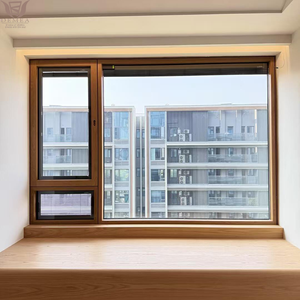
DEMEA Passive House Standard Energy Efficient Triple Glaze Windows for Residential Exterior Aluminum Clad Wood Casement Window
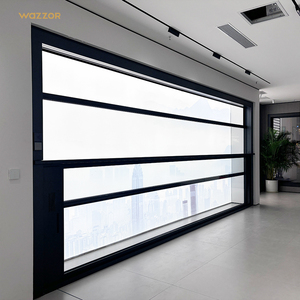
Wazzor Electric Lift Window | Motorized Vertical Operation Upward Electric Aluminum Windows Sliding Lift Window
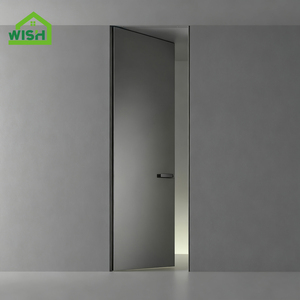
Modern Invisible Door Design High Quality Aluminum Frame Composite Hidden Door Suitable For House Interior Frameless Door
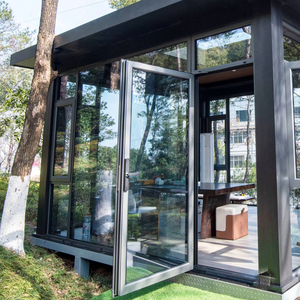
RG60C French Modern Design Aluminum Alloy Glass Door Thermal Insulation Side Opening Finished 5-Year Exterior Door
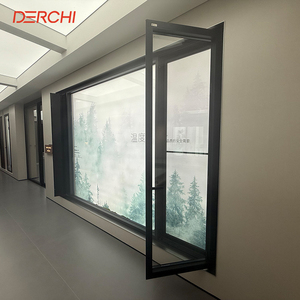
DERCHI Customized Fixed windows Double Tempered Insulating Broken Bridge windows Slim Profile Aluminium Casement windows
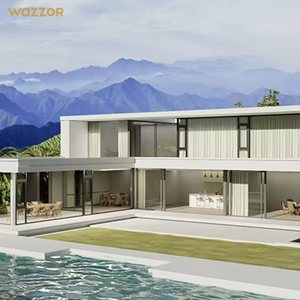
Wazzor Foshan Supplie Oem Interior Windproof China r Price Insulated Aluminum Frame Doors Sound Proof Casement Windows
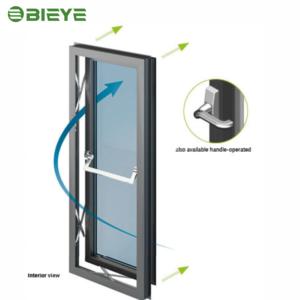
Launch Double-Layer Sliding Ventilation Window Kit Modern Aluminum Alloy Exterior Kitchen Bathroom Small Bathroom
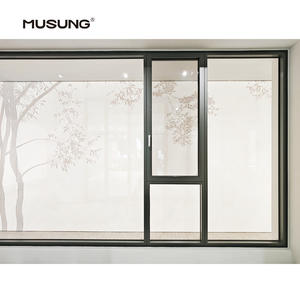
New Design Tilt Turn Windows Energy Efficient Sound Proof Aluminum Ultimate Casement Narrow Frame Windows
Executive Whitepaper: Strategic Fenestration Sourcing for Tokyo’s Built Environment
As the Greater Tokyo Metropolitan area accelerates its transition toward Zero Energy House (ZEH) compliance, mandatory 2025 energy efficiency standards under the revised Building Energy Efficiency Act, and heightened seismic resiliency protocols, selecting an experienced aluminium with glass door exporter has become a critical supply chain decision for Japanese general contractors, architectural firms, and real estate developers.
Operating from Foshan, China—the world’s premiere architectural aluminum processing capital—ZENIC Window & Door Technology Co., Ltd. supplies high-performance thermal break aluminum profile systems, heavy-duty sliding glass doors, and Passive House-grade casement units engineered specifically for overseas regulatory frameworks. Importing fenestration directly into Tokyo Bay (Ports of Tokyo and Yokohama) demands exact compliance with Japanese Industrial Standards (JIS A 4702), dynamic seismic shear performance, and refined structural aesthetics tailored for high-density urban living.
This technical whitepaper outlines the material science, thermal physics, structural engineering, and procurement dynamics governing the export of premium aluminum glass doors to Tokyo’s competitive commercial and residential construction sectors.
Key Structural & Thermal Capabilities
6063-T5 Structural Profiles
Extruded using 100% prime virgin aluminum billet with structural wall thicknesses between 2.0mm and 3.0mm. Provides superior torsional rigidity under extreme seismic acceleration forces in Tokyo Region 6 zone.
PA66GF25 Thermal Isolation
Polyamide 66 reinforced with 25% glass fiber breaks create multi-chamber thermal barriers, preventing internal condensation during Tokyo's winter temperatures while keeping U-values as low as 1.1 W/m²K.
Triple-Sealed EPDM Gaskets
Continuous automotive-grade EPDM synthetic rubber seals provide air permeability rating A-4 and watertightness grade W-5, preventing water ingress during seasonal Kanto typhoon deluges.
Localized Tokyo Architectural Application Scenarios
Designing fenestration systems for Tokyo requires balancing severe spatial limitations with extreme environmental durability. The architectural landscape of Tokyo ranges from compact infill housing in Minato-ku and Setagaya-ku to high-wind waterfront towers in Odaiba and Toyosu. ZENIC customizes door and window profiles to address these distinct micro-environments:
Scenario A: High-Density Minato & Shinjuku Urban Infill
Urban plots in central Tokyo often feature narrow footprints requiring maximized natural light penetration. ZENIC’s narrow-profile sliding and folding glass doors utilize ultra-slim sightlines (frameless or 20mm visible interlock options) to maximize day-lighting while ensuring high sound insulation (Acoustic Rating T-2 to T-3 / Rw 35dB) against street-level noise pollution.
Scenario B: Suburb ZEH Residential Villas (Setagaya & Yokohama)
In Tokyo’s suburban residential sectors, energy retention is paramount. Demands focus on triple-pane insulated glass unit (IGU) casement doors and aluminum-clad wood systems equipped with soft-coat Low-E glass and Argon gas fills, lowering heat loss and assisting homebuilders in acquiring government ZEH subsidies.
Scenario C: Commercial Terraces & Hospitality (Shibuya & Ginza)
For retail, dining, and boutique commercial projects requiring seamless indoor-outdoor transitions, heavy-duty lift-and-slide glass doors and motorized vertical upward electric lift windows provide expansive glass spans capable of sustaining continuous daily operation without threshold tripping hazards.
Scenario D: Coastal High-Rise Retrofits (Tokyo Bay & Chiba Waterfront)
Coastal structures face high atmospheric salt spray concentrations and intense wind loads. Fluoropolymer powder-coated (PVDF) aluminum profiles withstand salt fog corrosion testing for over 3,000 hours, ensuring frame structural integrity and color retention along Tokyo Bay.
JIS A 4702 & International Performance Standard Mapping
Comparative analysis of ZENIC engineered system metrics against mandatory Japanese fenestration benchmarks for Region 6 (Tokyo Metropolis).
| Performance Metric | Japanese Industrial Standard (JIS A 4702) Benchmark | ZENIC Aluminium Glass Door System Standard | Engineering Mechanics & Value Gain |
|---|---|---|---|
| Wind Pressure Resistance | Grade S-5 to S-6 (2400 Pa – 3600 Pa) | Up to 3600 Pa (S-6 Compliant) | Reinforced steel mullions & 6063-T5 alloy resist typhoon gust forces along coastal Tokyo. |
| Air Tightness | Grade A-4 (0.5 m³/h·m²) | Grade A-4 Continuous Sealing | Multi-point locking mechanism compresses continuous EPDM gaskets to stop thermal drafts. |
| Watertightness | Grade W-5 (500 Pa Pressure) | Grade W-5 (Stepped Hidden Drainage) | Concealed pressure-equalized drainage chambers eliminate water backflow during rainstorms. |
| Thermal Transmittance (U-Value) | Region 6 Mandate ≤ 2.3 W/m²K | U-Value 1.1 – 1.4 W/m²K | Polyamide PA66GF25 thermal breaks with triple-pane Low-E Argon units surpass ZEH standards. |
| Sound Insulation | Grade T-2 / T-3 (30dB – 35dB Reduction) | Rw = 38dB – 42dB Soundproofing | Asymmetric insulated glass unit thicknesses (e.g., 6mm + 12Ar + 5mm) dampen urban noise spectra. |
| Surface Finishing Durability | JIS H 8602 Anodizing / Powder Coating | AkzoNobel / PPG PVDF Fluorocarbon | Resists UV degradation, chalking, and coastal atmosphere corrosion over a 20-year cycle. |
Manufacturing Ecosystem: Why Tokyo Importers Rely on ZENIC
Navigating cross-border procurement between Chinese manufacturers and Japanese job sites requires complete transparency, proven quality management, and predictable logistics delivery. ZENIC operates as a direct manufacturer, eliminating intermediary trading markups while offering robust OEM/ODM engineering capabilities:
- 20,000 m² Advanced Production Base: Situated in Foshan, Guangdong, our factory houses high-precision German CNC double-head cutting saws, automated corner-crimping machinery, and specialized glass glazing lines capable of outputting over 150,000 square meters of system windows and doors annually.
- Pin-and-Glue Corner Crimping Technology: Corner joints utilize heavy-duty cast aluminum corner keys combined with dual-component epoxy injection. This delivers precise 90-degree corner squareness, superior structural rigidity, and permanent waterproof sealing at frame joints.
- Rigorous Export Quality Control: Every unit undergoes 100% pre-assembly inspection before crating. Sash operation, hardware locking smooth-ness, glass seal integrity, and dimensional tolerances (within ±1mm) are verified by internal quality audit teams.
- Containerized Export Packaging for Japanese Logistics: Finished units are wrapped in EPE protective foam, fitted with reinforced edge protectors, and secured within fumigation-free solid plywood crates. Palletized dimensions are optimized for flatbed truck transport through Tokyo’s tight urban street networks.
Key Market Trends Driving Aluminium Glass Door Demand in Tokyo
The Tokyo architectural fenestration market is undergoing rapid evolution driven by changing demographic needs, environmental legislation, and urban design philosophies. Overseas suppliers must adapt product lines to these four macro trends:
1. Decarbonization & ZEH / Passive House Scaling
With the Japanese government aiming for net-zero energy housing by 2030, builders are shifting away from uninsulated single-glazed steel or standard PVC profiles toward thermally broken aluminum systems that combine high thermal resistance with slim frame aesthetics.
2. Minimalist Frameless & Hidden Door Aesthetics
Modern Japanese interior architecture emphasizes clean lines and unobtrusive transitions. Concealed frame glass doors, invisible aluminum jambs, and pocket-sliding hidden systems are increasingly specified for luxury apartments and upscale commercial offices in Shibuya and Roppongi.
3. Universal Design & Motorized Automation
Japan’s aging demographic makes barrier-free access a standard specification. Zero-threshold flush bottom tracks, motorized vertical sliding windows, and smart sensor-activated lift-and-slide doors ensure ease of operation for all age groups.
4. Seismic Displacement Adaptability
Building frames in earthquake zones experience dynamic lateral movement during seismic events. Door profile systems must incorporate flexible structural silicone glazing and elastomeric gasket margins that accommodate frame rack without glass cracking.
Frequently Asked Questions by Tokyo Importers & Contractors
Technical clarity on minimum orders, lead times, custom sizing, regulatory compliance, and shipping logistics.
What is the Minimum Order Quantity (MOQ) for importing aluminum glass doors to Tokyo?
How do ZENIC aluminum profiles comply with Japanese Building Standard Law (BSL) and JIS standards?
What is the typical production lead time and shipping duration to Tokyo or Yokohama ports?
Can ZENIC supply custom sizes, custom RAL color finishes, and wood-grain surface textures?
How are glass units engineered to handle Tokyo's winter condensation and summer heat?
Do you support OEM / ODM branding for Japanese window distributors and real estate developers?
Ready to Spec High-Performance Aluminium Glass Doors for Your Tokyo Project?
Contact our structural engineering team today to submit your CAD drawings, request technical datasheets, or order custom aluminum profile sample kits.